

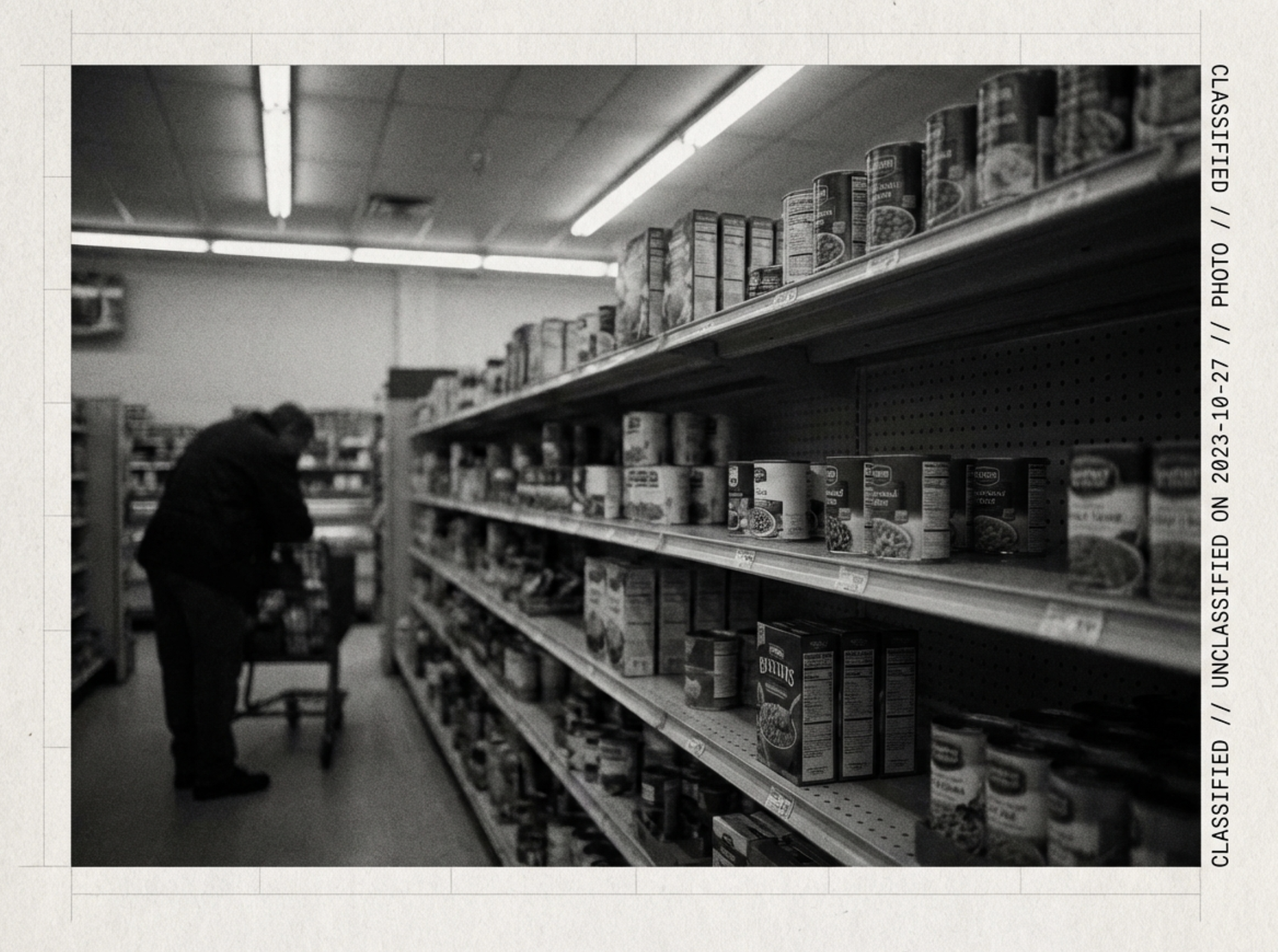
Most people think price changes are obvious.
They look at inflation reports.
They look at grocery bills.
They look at gas prices.
Those numbers matter—but they are often lagging. By the time a move is big enough to print in a national index or to show up in casual conversation, it has usually been working through the system for a while.
What tends to be more interesting—especially early—is where prices don’t change, or where they move in forms that never make a headline.
The quiet moves
A product keeps the same sticker price, but the package is a little smaller. The per-unit cost drifts up while the shelf still “feels” stable.
A supplier holds the list price but starts asking for larger minimum orders, longer payment terms, or tighter delivery windows. The invoice line looks familiar; the friction underneath is new.
A category stops going on promotion the way it used to. Nothing “spikes.” The pattern just thins out—fewer deep discounts, shorter windows, more conditions.
None of these register as events. They don’t ping news apps. They don’t show up where most people are trained to look.
Yet they often appear early in environments where input costs are wobbling, inventory is being managed more cautiously, or someone upstream is trying to protect margin without triggering a visible price war.
Recommended reading
Why Energy Prices Spike Before Anyone Warns You
The early signals most people miss before energy costs jump.
Where the headline isn’t
Another pattern worth watching: stability in the visible channel paired with movement somewhere else.
Wholesale or contract pricing can adjust while retail packaging stays frozen for a season.
Regional shelves can diverge—same chain, different cities, different fill rates—without a story tying it together.
Restock cadence can stretch: not “out of stock,” just “a few days slower,” then a few more.
Aggregates smooth that out. Personal experience might not, if you’re only watching one store or one category.
So the gap isn’t ignorance—it’s field of view. The signals that help you notice a shift early often live in fine print, in pack size, in terms, in timing, and in what stopped happening as much as in what went up.
There is also a difference between level and volatility. A price can look flat while the path to that price gets noisier—more exceptions, more substitutions, more “call for availability.” Flatness on the receipt doesn’t always mean calm in the system that produced it. Sometimes the sticker is the last thing to move—and sometimes it moves only after the easy adjustments elsewhere have already been exhausted.
Why it matters for how you read the world
This isn’t a call to obsess over every SKU. It’s a reminder that headline inflation is a summary, and summaries arrive late.
If you care about preparedness or operations—not prediction theater, but staying oriented—it helps to keep a small, boring checklist: a few products you actually buy, a few lead times you actually depend on, and whether “normal” for those things is still holding.
When the obvious numbers finally move, you’re not surprised.
When they haven’t moved yet but the edges are fraying, you’re not lulled into thinking nothing is happening.
It’s usually not the obvious changes that matter first.
Recent updates
- Why "Normal" Is Becoming Harder To DefineThe baseline people rely on is shifting more than they realize.
- What’s Starting to Shift Beneath the Iran HeadlinesWhen a situation is serious enough to dominate news, the early strain often shows up somewhere quieter—routing, timing, and terms, not slogans.
- The Supply Signals Most People Miss CompletelyNot all supply disruptions look like empty shelves.